Are Icicles Bad for Your Roof?
By Jeralin-Admin
As winter settles in across West Michigan, it's common to see icicles forming along roof edges and gutters. While they can look picturesque, many homeowners ask the same question every winter:
Are icicles bad for your roof?
Here's the short answer: Icicles themselves usually aren't a problem - but they're often a warning sign of bigger issues that can damage your roof.
Below, we'll explain what causes icicles, when they're harmless, when they signal trouble, and how to protect your roof during Michigan's harsh winter conditions.
Quick Answer: Are Icicles Bad for Your Roof?
No-icicles by themselves typically don't damage your roof. However, large or excessive icicles often indicate heat loss, poor insulation, or ice dam formation, which can lead to leaks, gutter damage, and interior water damage.
Why Do Icicles Form on Roofs?
Icicles form when the snow on your roof melts, flows toward the eaves, and refreezes as it drips off the edge. This happens when:
- Heat escapes through the attic or roof deck
- Snow melts unevenly across the roof surface
- Freezing temperatures cause water to refreeze at the edges
A small number of icicles after a snowstorm is normal.
Large clusters or thick icicles, however, typically indicate inconsistent roof temperatures.
Are Icicles on My Roof Dangerous?
Icicles can pose two types of risks:
1. Safety Risks
- Large icicles can break off and fall
- They can injure people, pets, or damage property below
- Entryways and walkways are especially vulnerable
2. Roofing System Warning Signs
While icicles don't usually damage shingles directly, they often signal conditions that lead to ice dams, which are damaging.
Icicles vs. Ice Dams: What's the Difference?
As a homeowner, understanding the difference between icicles and ice dams is critical.
Icicles vs. Ice Dams
| Icicles | Ice Dams |
|---|---|
|
Cone-shaped ice hanging from roof edges or gutters.
|
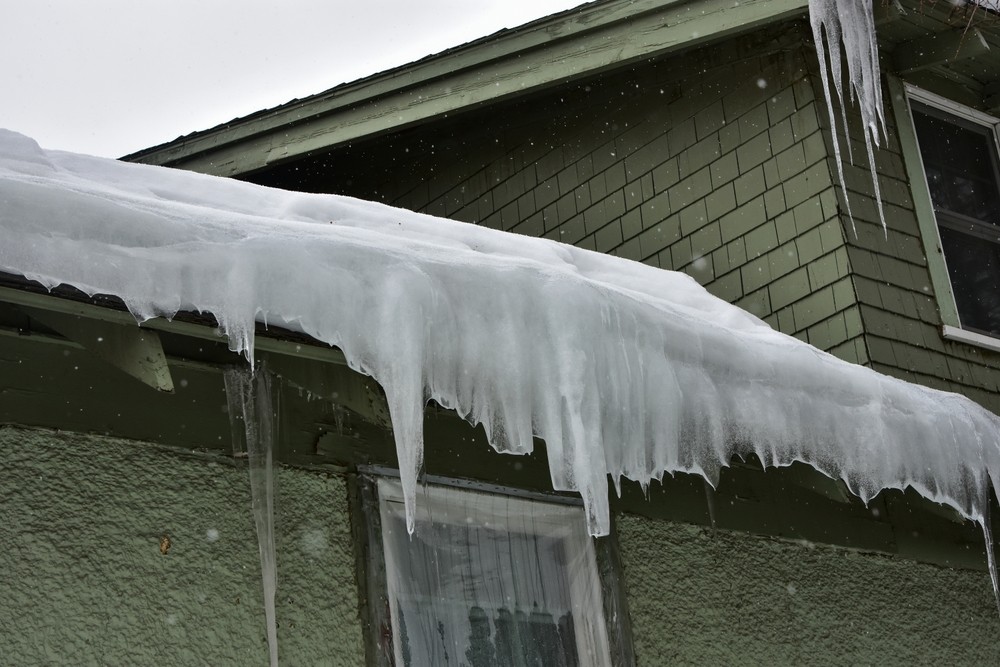
Thick ridges of ice that form along the roof edge.
|
According to the InterNACHI, ice dams form when heat loss causes snow to melt and refreeze at the roof edge, trapping water that can seep under shingles and into the home.
Ice dams are a serious problem. They can cause:
- Roof leaks
- Shingle deterioration
- Gutter failure
- Interior ceiling and wall damage
If you're seeing large icicles paired with thick ice buildup, there's a strong chance ice dams are forming.
What Causes Ice Dams and Excessive Icicles?
The most common causes of ice dams and excessive icicles during Michigan winters include:
Poor Attic Insulation
Heat escaping from your home melts snow unevenly, creating freeze-thaw cycles that lead to ice buildup.
Inadequate Roof Ventilation
Without proper airflow, warm air gets trapped near the roof deck, accelerating snowmelt.
Michigan's Freeze-Thaw Cycles
Rapid temperature swings are common in West Michigan, making ice dam formation more likely.
How to Prevent Icicles and Ice Dams From Forming on Your Roof
Preventive steps can significantly reduce winter roof issues and prevent the formation of icicles and ice dams:
- Improve Attic Insulation - Consistent insulation keeps warm air inside your home, not melting snow on your roof.
- Ensure Proper Roof Ventilation - Balanced intake and exhaust ventilation helps maintain uniform roof temperatures.
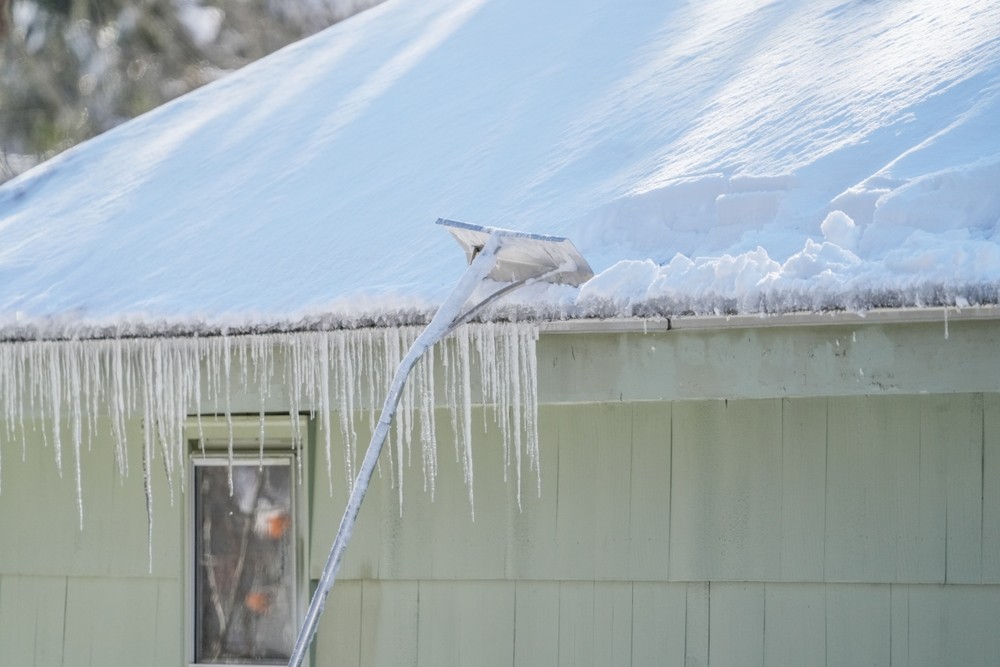
- Remove Snow Safely - Snow removal reduces the amount of meltwater that can refreeze, thereby preventing ice buildup. This should always be done by professionals to avoid injury or roof damage.
- Upgrade Roofing Materials - Certain roofing systems, like standing seam metal roofs, shed snow more effectively and are less prone to ice dam issues.
What NOT to Do If You Have Icicles or Ice Dams:
- ❌ Don't knock icicles off with tools
- ❌ Don't chip away ice on your roof
- ❌ Don't climb onto icy or snow-covered roofs
DIY removal often leads to personal injury or roof damage. Leave the risks to the pros!
How to Handle Icicles and Ice Dams Safely:
If you already have icicles on your roof or suspect ice dams:
- Contact a professional roofing contractor
- Have the ice safely removed
- Inspect for hidden damage
- Address insulation or ventilation issues
Fixing the root cause is the only way to prevent repeat problems.
Seeing Icicles This Winter? Werner Roofing Can Help
If your home is covered in icicles this winter, your roof may be telling you something important.
Werner Roofing helps West Michigan homeowners:
- Identify insulation and ventilation issues
- Prevent ice dams and winter roof damage
- Repair leaks and weather-related roofing problems
Schedule your free roof inspection today and protect your home before winter damage worsens.
FAQs: Icicles and Roof Damage in Michigan
Q. Are icicles bad for your roof?
A. Icicles themselves usually don't damage your roof. Still, large or excessive icicles are often a warning sign of heat loss, poor insulation, or ice dams - all of which can lead to leaks and structural damage.
Q. Do icicles mean I have an ice dam?
A. Not always. A few small icicles are normal. However, large clusters of thick icicles often indicate conditions that cause ice dams, especially when paired with ice buildup along the roof edge.
Q. Are ice dams worse than icicles?
A. Yes. Ice dams are far more damaging than icicles because they block melting snow from draining properly, forcing water back under shingles and into your home.
Q. Why do icicles form on some houses but not others?
A. Icicles form when heat escapes through the attic or roof deck, melting snow unevenly. Homes with better insulation and ventilation tend to have fewer icicles.
Q. Can icicles damage gutters?
A. Yes. Heavy icicles can pull gutters away from the fascia, bend metal gutters, and damage fasteners - especially during repeated freeze-thaw cycles.
Q. Should I remove icicles myself?
A. No. Removing icicles without proper tools and experience can be dangerous and may damage your roof or gutters. It's best to contact a professional.

OUR FREE ROOF INSPECTION
How do you know when it's time for a new roof? The only way to be sure of your residential roof's current condition is to have a licensed professional personally inspect it. Werner Roofing is proud to offer free roof inspections for every client, so you can be sure of your roof's condition. Every Werner Roofing inspection comes complete with our promise: "We won't recommend or sell a roof replacement unless it's necessary."